
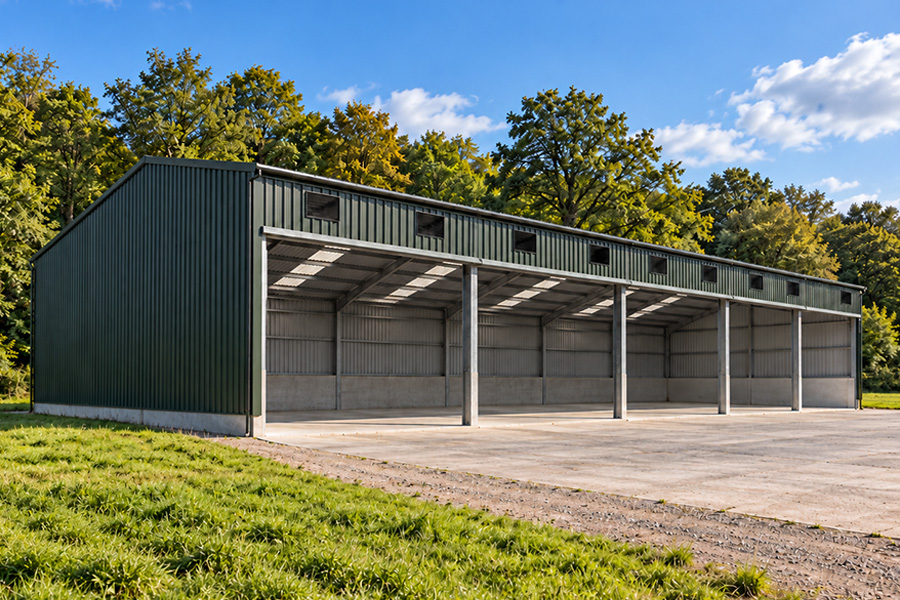
AssetSphere developed a full planning strategy, coordinated specialist input, and provided careful post-permission management to secure a deliverable consent for a new agricultural building.
The planning challenge
A new client approached AssetSphere for advice on securing planning permission for a new general-purpose agricultural building for the storage of feed, bedding and machinery.
Our initial planning screening identified that the usual agricultural permitted development route was not available. This highlighted the importance of reviewing the planning position at an early stage, and AssetSphere developed a full planning application strategy instead.
The proposed location also required clear justification of the operational need for the building, its siting, and its potential landscape and ecological effects.
AssetSphere’s approach
AssetSphere developed the planning strategy, prepared the supporting planning statement and coordinated the building drawings and specialist ecological input from Greenwood Ecology & Countryside Management.
The ecological assessment demonstrated that the required Biodiversity Net Gain (BNG) could be delivered entirely within the application site.
During the application process, changes to the BNG exemptions meant that, had the application been submitted later, the development would have qualified for an exemption. However, the new exemption could not be applied retrospectively.
AssetSphere advised the client of the option to withdraw and resubmit the application without the BNG requirement. Given the additional time involved, and because the required biodiversity gain could be delivered on-site, the client decided to continue with the existing application.
Beyond planning permission
Following approval by Dorset Council, AssetSphere continued to manage the post-permission process.
Greenwood Ecology & Countryside Management prepared the Biodiversity Gain Plan and Habitat Management and Monitoring Plan. When the Planning Officer raised queries over the documentation required, AssetSphere liaised with the Council and coordinated the additional information needed to address these points and progress the discharge of the relevant requirements.
The successful outcome
Planning permission was secured, and the relevant pre-commencement biodiversity requirements were subsequently approved, allowing the development to move forward.
This case demonstrates the value of early planning screening, practical advice when regulations change, coordinated specialist input, and continued management beyond the initial grant of planning permission.
Considering a new agricultural building?
Early advice can help identify the most appropriate planning route, potential constraints, and the supporting information likely to be required before unnecessary time or cost is incurred.